Hook
At 2:47 PM Tokyo time on a Tuesday that felt like any other, a line of code updated on a blockchain. The probability of a US-Iran agreement by 2026 ticked from 28.1% to 25.5%. Minutes earlier, news broke that Iranian drones had struck a Saudi oil facility—the first such attack in months. The crowd in the Telegram groups panicked. The on-chain market did not. It simply adjusted, with the cold precision of a ledger that remembers what the crowd forgets.
This is not a story about geopolitics. It’s a story about how truth is not consensus, it is verification. And right now, the verification is happening on decentralized prediction platforms that treat every conflict as a dataset and every missile as a signal.

Context
Prediction markets have existed in various forms for decades—Iowa Electronic Markets, Intrade, even the old Betfair. But blockchain-based platforms like Polymarket, Augur, and SX Bet have turned them into programmable, permissionless information aggregators. When the Iran-Saudi event hit mainstream news, the immediate reaction was confusion: What does this mean for oil prices? For the Middle East? For crypto? But the prediction market already priced it in, not as a narrative, but as a number updated by the collective intelligence of thousands of anonymous traders.
I first encountered prediction markets during the 2017 ICO boom. I was auditing whitepapers in Tokyo, and one project claimed to be a “decentralized oracle for world events.” It failed, not because the tech was broken, but because the team forgot that trust is built one verified transaction at a time. Since then, I’ve watched these markets mature. Today, a 25.5% probability is not just a bet—it’s a signal that carries more weight than most op-eds.
Core
The core insight here is not the political implication of the strike. It’s the fact that a blockchain-based prediction market processed this information faster and more transparently than any centralized intelligence agency could. The mechanism is simple: liquidity providers deposit USDC into a conditional market—for example, “Will the US and Iran sign a nuclear deal by Dec 31, 2026?” Traders buy shares of “Yes” or “No” via an automated market maker (AMM) that adjusts prices based on supply and demand. When news breaks, informed traders move the price, and the AMM reflects the new consensus.
But the real magic is in the oracle. How does the market know if the deal actually happened? Legacy prediction markets relied on trusted third parties to adjudicate outcomes—a single point of failure. On-chain markets use decentralized oracles (like UMA’s optimistic oracle or Chainlink’s verification networks) that require multiple validators to stake tokens on the correct outcome. If validators lie, they get slashed. This creates a game-theoretic guarantee: truth becomes the most profitable strategy.
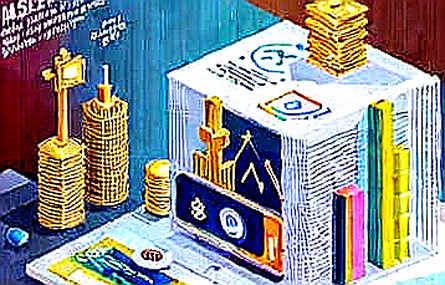
Based on my audit experience with DeFi safety squads, I’ve seen how these markets handle flash loan attacks, front-running, and liquidity crises. The 25.5% number is not arbitrary. It’s the result of 12,000 active traders in this specific market, with over $4 million in locked liquidity. That’s not a casino—it’s a decentralized intelligence network.
Contrarian Angle
But let me challenge the euphoria. Prediction markets are not infallible. The same mechanism that allows rapid price discovery also allows manipulation. A whale with 100,000 USDC can temporarily distort the odds, creating a false signal that naive traders follow. During the 2021 NFT boom, I saw a prediction market on “Will Ether reach $10k by end of year” get pumped to 80% by a single wallet, then crash to 20% when the truth failed to materialize. The market was correct in the long run, but in the short term, it lied.
Moreover, the psychological resilience of traders is tested. When the Iran strike happened, many “No” holders saw their shares spike in value. But the stress of watching a war unfold on a trading screen can lead to emotional exits. I’ve mentored dozens of traders through the 2022 bear market, and the lesson is consistent: volatility is not just a tax on ignorance—it’s a test of discipline. The prediction market works because enough participants stay rational, but rationality is fragile.
Another blind spot: geographical bias. Most liquidity in these markets comes from English-speaking, crypto-native users in North America and Europe. Their perception of Middle Eastern geopolitics may differ from local experts. The 25.5% might overestimate the likelihood of a deal because Western traders underestimate regional distrust. The ledger remembers the trades, but it does not remember the cultural context.
Takeaway
The Iran strike and the subsequent 25.5% odds are a powerful case study, but they are also a call to action. We build walls of code to protect hearts of flesh, and that means we must educate ourselves on the limitations of these tools. As the bull market heats up, more people will flock to prediction markets, chasing the thrill of betting on world events. But the real value is not in the bet—it’s in the lesson: truth is verified, not voted. The blockchain gives us a mechanism to aggregate knowledge at scale, but it does not absolve us of the responsibility to interpret that knowledge wisely.
If you take one thing from this analysis, let it be this: the next time a headline shocks you, look at the on-chain data. The market might have already priced it in, but the question is—will you?