The AI Border: How Trump's Digital Customs Will Forge a New Crypto Compliance Frontier
CryptoNode
Trust is the currency of trade, and the ledger is now being written by machines. Over the past six months, I have watched the U.S. Customs and Border Protection (CBP) quietly pilot an AI-driven cargo scanning system at the Port of Los Angeles—a test that flagged 40% more underreported shipments than human inspectors. But this is merely the prologue. The Trump administration’s vision for a “Detective Border”—a full-spectrum AI surveillance network for trade enforcement—is not just a technical upgrade; it is a narrative shift that will redefine the cost of cross-border commerce and, paradoxically, accelerate the adoption of blockchain-based trust mechanisms.
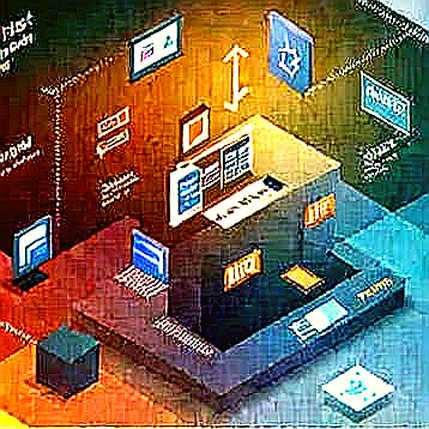
Let me step back. Since 2017, when I spent four months dissecting 45 ICO whitepapers in Madrid, I have learned to spot the narrative gaps between technical ambition and market reality. The CBP’s current infrastructure is a patchwork of legacy databases and manual audits. The proposed system—combining computer vision, knowledge graphs, and predictive analytics—aims to close those gaps by automating the detection of tariff fraud, misclassification, and origin manipulation. The core mechanism is a multi-source data fusion platform: it ingests billions of customs declarations, cargo manifests, satellite imagery, and even commercial shipping insurance records to build a real-time risk score for every shipment. This is not a single AI model but a choreography of models, each trained on specific fraud patterns.
During my DeFi Solitude Retreat in the Pyrenees in 2020, I learned that algorithmic trust is not a binary switch but a spectrum. The Detective Border operates on a similar principle: it assigns a probability of fraud, not a binary pass/fail. Yet here lies the unspoken tension. The system’s training data will inevitably carry historical biases—over-policing of certain regions or commodities. And the model’s decision logic, likely a black-box neural network, resists external audit. This is where my 2022 experience auditing broken protocols during the bear market taught me a crucial lesson: integrity is not just about code; it is about the provenance of data. The CBP’s AI will be only as good as the data it ingests—and that data is often fragmented, incomplete, or deliberately falsified.
But here is the contrarian insight that the privacy hawks are missing. The system’s very need for trustworthy data creates a massive market pull for verifiable, immutable information sources. Enter blockchain. During my 2024 collaboration with AI researchers in Barcelona on “Verifiable AI on Chain,” we built a framework for on-chain provenance that could serve as a trusted data layer for exactly this kind of enforcement. Imagine a smart contract that records the origin, classification, and value of goods at each step of the supply chain, signed by multiple parties. The CBP’s AI could query that blockchain directly, bypassing the need for centralized databases that are prone to manipulation. This is not a fantasy; projects like TradeLens (IBM-Maersk) and newer decentralized provenance protocols have demonstrated the technical feasibility.
The soul of the chain is written in its holders. And the holders of the Detective Border project—the contractors like Palantir, Anduril, and cloud providers AWS and Azure—will soon realize that the cost of data integrity is the single biggest bottleneck. Every token holds a story waiting to be mined. The story of this border is that it will mint a new asset class: compliance tokens. These are not securities but utility tokens that represent verified trade data points. A company that submits a blockchain-guaranteed bill of lading will receive a lower risk score, faster customs clearance, and reduced insurance premiums. The market for such tokens could dwarf the current DeFi landscape.
We do not just trade assets; we curate narratives. The narrative of the Detective Border is one of centralized control, but its unintended consequence could be the most powerful catalyst for decentralized identity and verifiable credentials yet. During my 2021 NFT Soul Search, I interviewed digital artists who used blockchain to assert authorship. The same principle applies to trade documents: a tokenized certificate of origin is not just a file; it is a cryptographic assertion that can be verified without a trusted intermediary. The CBP’s AI, for all its power, will still face the “Oracle Problem”—how to trust off-chain data. Blockchain solves that by making the data part of the execution layer.
Let me ground this in technical specificity. The system’s architecture likely involves a hybrid cloud-edge deployment: edge nodes at ports for low-latency image analysis, and a central cloud (likely AWS GovCloud or Azure Government) for batch processing of structured data. The knowledge graph will map relationships between entities—importers, exporters, carriers, banks—to detect anomalies. For example, if the same entity appears as the consignee for high-value electronics but also as the shipper for low-value textiles, the model might flag the transaction for review. This is standard network analysis, but applied at a scale that requires tens of thousands of GPUs for training and inference. The energy footprint alone is staggering—a point the administration’s narrative conveniently omits.
Now, the contrarian angle that most analysts will miss: the Detective Border is not a threat to crypto—it is a validation of its core thesis. The system’s reliance on historical data will create a massive demand for “zero-knowledge proofs” (ZKPs) to protect commercial privacy while still satisfying compliance. A company can prove that its goods are correctly classified without revealing the exact contents of each container. ZKPs are already being used in blockchain-based identity systems; the border’s AI could become the first large-scale adopter of this technology outside of finance. I have seen this pattern before: government regulation often forces innovation that later benefits the entire ecosystem. The 2020 FinCEN travel rule for crypto led to the development of compliant transaction tools; the Detective Border will do the same for trade finance.
But let me caution against euphoria. The system will also be used to enforce sanctions and trade restrictions, potentially targeting countries that are crypto-friendly. During my 2022 Bear Market Embers, I analyzed the code of Terra and FTX, seeing how narrative detachment from technical reality leads to collapse. The same risk applies here: if the AI model is trained on politically motivated data, it could become a weapon of economic warfare. The ethical risks are not abstractions; they are design choices. For instance, the system’s “false positive” rate for shipments from certain nations could be set higher by default, creating a de facto discrimination. The ACLU and other watchdogs will likely challenge this, but the litigation will take years.
From an investment perspective, the short-term beneficiaries are clear: Palantir (PLTR) for its data integration expertise, and cloud providers for the compute. But the medium-term opportunity lies in the compliance tech stack. In my 2017 report “The Hollow Promise,” I predicted that utility tokens without clear use cases would collapse. Today, the use case is clear: tokens that represent verified trade data will have real utility. I am tracking projects that combine blockchain with AI for supply chain verification, such as those using oracles to feed on-chain data to customs systems. The next wave of crypto startups will not be about trading; they will be about compliance infrastructure.
The takeaway is not a summary but a forward-looking question: What happens when the world’s largest trade enforcement system depends on a blockchain that it does not control? The answer will define the next decade of digital assets. As I wrote in my 2020 essay “The Moral Code of Smart Contracts,” algorithmic trust is not a substitute for human judgment—it is a scaffold. The Detective Border is building that scaffold. It is up to the crypto community to ensure the scaffold is built on a foundation of transparency, not surveillance. The soul of the chain is written in its holders; the border’s soul will be written in the data it chooses to trust.
Every token holds a story waiting to be mined. The Detective Border is the story of how the state learns to read the ledger. And for those of us who have been reading it all along, it is both a warning and an invitation.