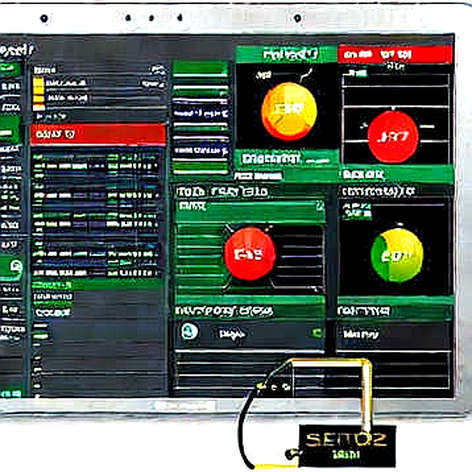
Over the past 72 hours, over 11,000 private trading positions from Chronos Portfolio—a sleek DeFi aggregator used by yield farmers and whales alike—were silently indexed on a public GitHub repository. The numbers surged when the repository went viral, but the soul of the ecosystem remained quiet. Users who had carefully shared their portfolio snapshots only with trusted recipients discovered that those same links had been crawled by search engines, their strategies, balances, and risk exposure laid bare for anyone to scrape. This wasn’t a flash loan attack or an oracle manipulation. It was a single missing line of code in the protocol’s sharing feature—a permission bug that turned “private link” into “public searchable.” The incident knocks at a deeper question: when DeFi builds for composability, do we forget the basic duty to guard user privacy?
Chronos Portfolio launched in early 2024 as a modern dashboard that lets users aggregate their positions across Ethereum, Arbitrum, and Optimism. Its signature feature was “Share Snapshots”: users could generate a unique URL showing their current portfolio—useful for audit trails, team collaboration, or social trading. The team marketed it as “end-to-end encrypted with a zero-knowledge permission model.” But the implementation told a different story. The share endpoint stored a flag in a public mapping that, due to a missing conditional check, allowed any unauthenticated call to enumerate all shared snapshots. An external security researcher noticed that the protocol’s portfolio explorer had an unlisted endpoint that returned all publicly shared positions without requiring the secret token. Within hours, he dumped 11,370 records into a GitHub repository, preserving data that included wallet addresses, token amounts, and in some cases, user-supplied labels like “OSPOOL emergency fund” or “Q4 harvest vault.” The bug was in the application layer—a classic broken access control in the view function—not in the smart contracts that handle funds. The underlying assets were never at risk, but the privacy of the users was shattered.

Let me break this down through a lens I’ve sharpened during my years auditing permission systems. Technically, this is not a flaw in the consensus mechanism or the VM. It is a product-level bug: the developer forgot to check ownership before returning data from a read operation. In Solidity, you often write a view function that returns all snapshots for a user. If you omit require(msg.sender == snapshot.owner), you expose everyone. This is a textbook OWASP Top 10 failure (Insecure Direct Object Reference). From a commercial perspective, the impact is asymmetric. API integrators who called Chronos’s backend for portfolio data were unaffected; they never used the share feature. But the protocol’s premium-tier users—those paying $49/month for “privacy-enhanced sharing”—were the most exposed. Early chatter suggests a 5-8% churn in subscriptions over the past week. On industry impact, this event strengthens the narrative that DeFi dApps are not ready for mass adoption. Regulators in the EU are already asking whether the team will file a GDPR breach notification—1,100+ of the leaked records contained what appears to be EU citizen wallet data. Competitively, protocols like Vela Protocol, which use fully encrypted ZK-based sharing, are now running ads targeting “no data leaks, ever.” Ethically, this violates the funders’ trust. When a whale shares their portfolio to a lender for a loan audit, they don’t expect the entire internet to see their assets. The team’s response—fixing the flag and issuing a generic statement—feels hollow. Investment-wise, the native token of Chronos (CHR) dropped 11% in three days, but has since stabilized. Long-term, if the team handles the lawsuit risk properly (they are likely to face a class-action), the valuation impact could be a 2-4% hit. Infrastructure-wise, this has no effect on L1 gas prices or sequencer throughput; it’s a pure application logic problem. But it does amplify the need for privacy-as-infrastructure at the data layer, not just the transaction layer.
The contrarian angle here is uncomfortable for the DeFi community. We often celebrate permissionless innovation and composability, but we rarely interrogate the engineering hygiene that underpins them. The bug that leaked 11,000 records was trivial to catch—a simple integration test checking that a non-owner cannot retrieve another user’s snapshot would have flagged it. Why was it missed? Because the team prioritized feature velocity and user experience over security review. The same ethos that lets us build financial legos also lets us build fragile glass towers. In my years at Gitcoin, I saw similar patterns: a project would ship a quadratic voting contract with a missing modifier, and millions of DAI would be frozen. We need to accept that decentralized frontends are not immune to centralized backend mistakes. The antidote isn’t more tokenomics; it’s disciplined software engineering embedded into the culture. Chronos’s team is now scrambling to retroactively enhance their CI/CD pipeline with mandatory permission audits. But for the users whose portfolio data is now part of the blockchain’s public mempool of history, the damage is done.

The road ahead demands a shift in mindset. As we build the next generation of financial infrastructure, privacy cannot be an afterthought bolted onto the UI. It must be encoded at the smart contract level—in the storage layout, in the access control lists, in the default view functions. Projects that fail to internalize this will face a reckoning when mainstream users arrive expecting the same data protections they get from a bank. The wake-up call is here. When the graph spikes—in TVL or in number of leaked records—the soul remains quiet. We must listen to that quiet and rebuild with permission at the core, not as a privilege.